Lightweight Machine Learning Decoding for Quantum Error Correction
- Finalist at the S.T. Yau High School Science Award (Asia)
- Delivered an oral defence at the University of Hong Kong
- Finalist at the IRIS National Fair
Abstract
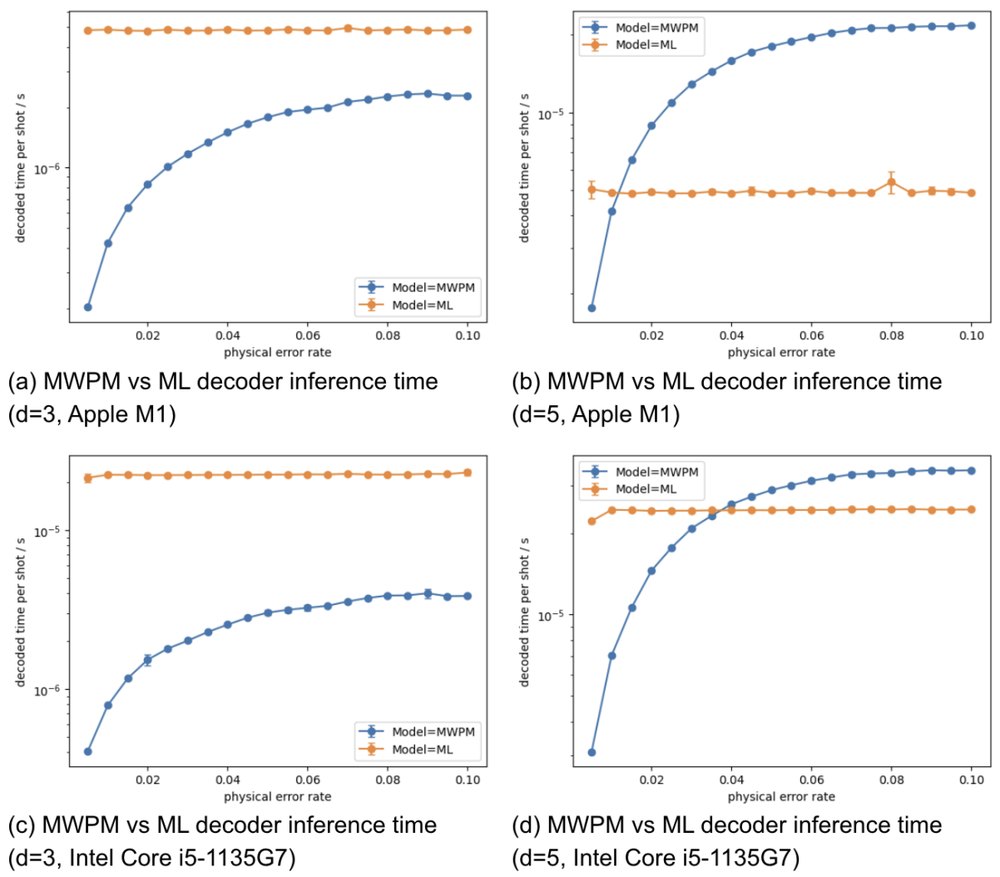
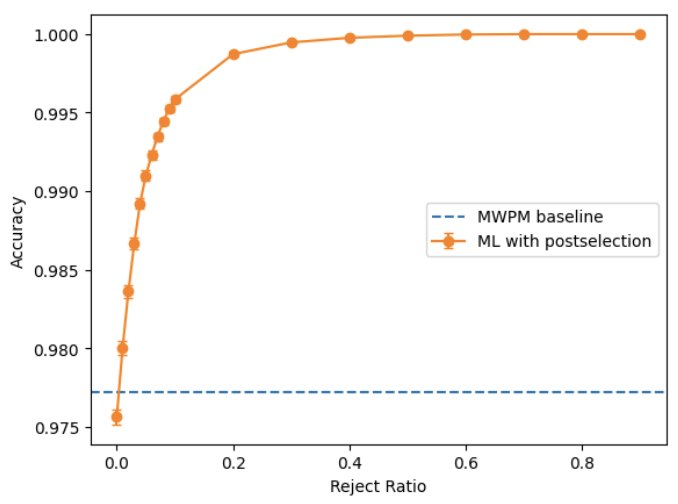
Practical quantum computation is limited by physical errors arising from environmental noise. Decoders interpret noisy information produced by quantum computers to predict logical errors. Many high-performance machine learning (ML) decoders rely on large, computationally intensive architectures, increasing inference latency and complicating real-time deployment. This study developed a lightweight feedforward neural network for decoding rotated surface codes on consumer-grade hardware. The model was trained at a single physical error rate under a depolarising noise model, then evaluated across physical error rates and under biased Pauli noise. It outperformed minimum-weight perfect matching (MWPM) at distance d=3 under both noise models and achieved comparable performance at d=5 under depolarising noise, though it performed slightly worse under biased noise. Additional classification metrics and receiver operating characteristic and precision-recall analyses demonstrated effective discrimination despite strong class imbalance. Inference time increased with distance and physical error rate for MWPM, with throughput showing opposite trends. By contrast, both quantities remained approximately constant for the ML decoder, indicating favourable scaling characteristics. However, MWPM was more memory-efficient. Ensembling and postselection were investigated to increase the accuracy of the ML decoder at d=5. An ensemble of three models or postselection with a reject ratio of 0.01 was sufficient for the ML decoder to exceed MWPM accuracy, although both approaches introduce deployment tradeoffs. Overall, this study demonstrates the potential of lightweight neural networks for low-distance, low-latency QEC decoding. It also shows the feasibility of conducting lightweight ML-based QEC research using accessible computational resources.
Integrative Transcriptomic and Network Based Framework for Designing Heat-Stress and Protective Topical Therapies in Mammals
- CREST Gold Award, meeting 15/15 criteria
- Published in the Oxford Journal of Student Scholarship after peer review
Abstract
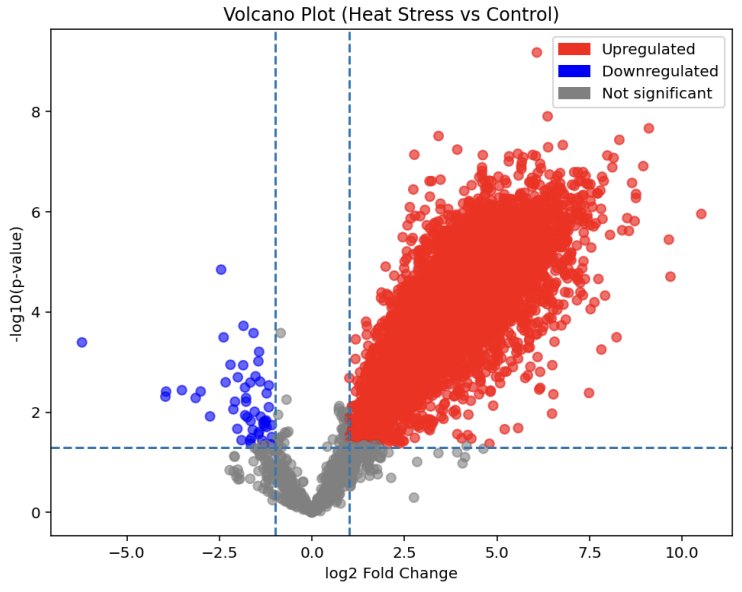
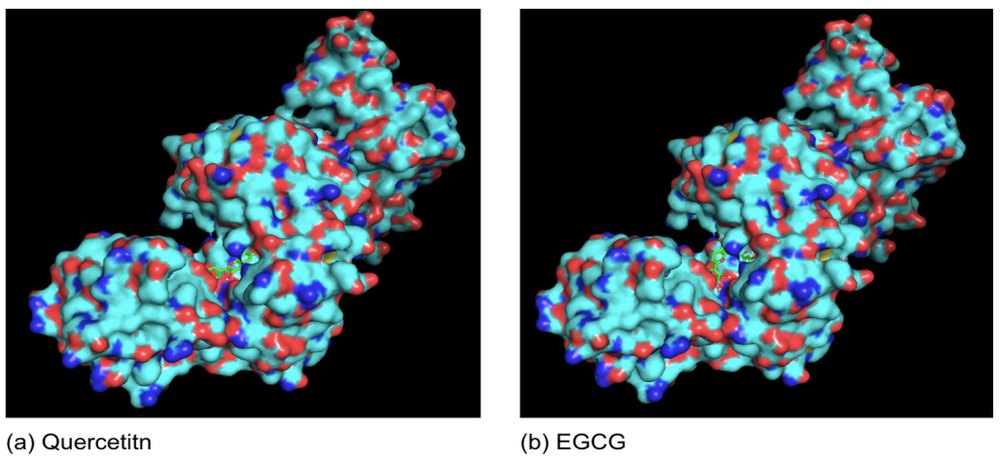
Anthropogenic climate change and the urban heat island effect have significantly increased the risk of heat stress in urban mammals. Existing cooling strategies for animals primarily focus on physiological management and often overlook molecular-level mitigation of heat-induced cellular damage. Therefore, this study aimed to employ bioinformatics and computational chemistry approaches to identify candidate bioactive compounds for heat stress mitigation in mammals. A heat stress-related Bos taurus gene expression dataset was analyzed using differential expression analysis; a total of 6273 statistically significant DEGs were identified, of which 1202 were highly differentially expressed (|log₂FC| > 5). Protein–protein interaction network analysis and functional pathway enrichment analysis were subsequently performed to investigate functional relationships among these genes and associated biological pathways, leading to the identification of nine key DEGs. Several of these genes were also associated with heat stress pathways across multiple mammalian species, demonstrating the broader relevance of the findings. Molecular docking analysis was conducted to evaluate the interaction potential of selected antioxidative and anti-inflammatory bioactive compounds with proteins corresponding to the top DEGs, UBA52 and RPS9, as well as HSP90, a well-established heat shock protein. Among the tested compounds, epigallocatechin gallate and quercetin demonstrated the strongest binding interactions, leading to the proposal of a formulation incorporating these compounds. Overall, this study highlights the potential of integrating bioinformatics and computational approaches to identify candidate compounds for mitigating heat-induced cellular stress in urban animals. Further experimental validation is required to confirm these findings.
Engineering and Testing a Low-Cost Portable Device for Multispectral Albedo Measurement
Abstract
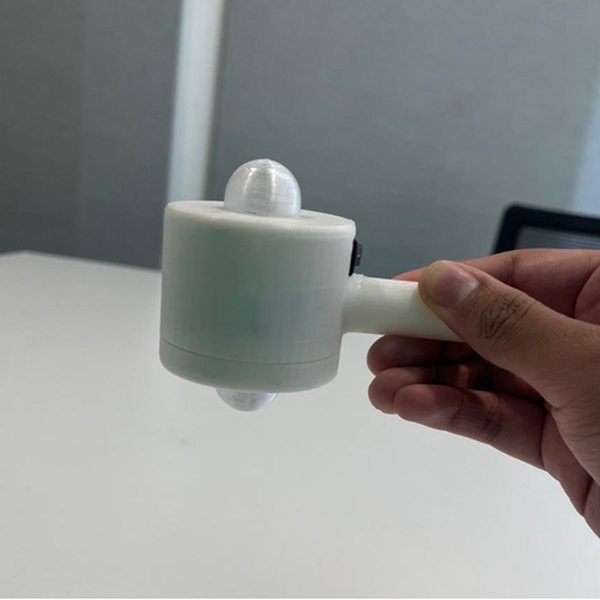
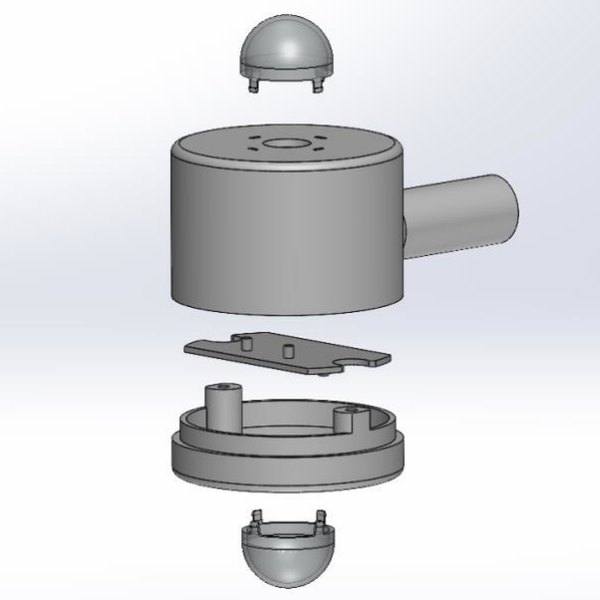
The Urban Heat Island (UHI) Effect, characterised by the temperatures in urban zones being significantly higher than surrounding rural areas, is a severe problem in large cities. Albedo is the fraction of the incident radiation that is reflected from a surface. The UHI effect is driven primarily by the re-radiation of absorbed solar energy from low-albedo urban structures like pavements and roofing. Albedo is measured using albedometers, which are generally composed of two pyranometers and tend to be expensive and relatively unportable. In this project, the design of a low-cost, mobile albedometer is proposed, capable of measuring both broadband and spectral albedo, integrating orientation to ensure stable deployment. A calibration method for an outdoors environment is also developed using the ASTM (American Society for Testing and Materials) G-173 dataset. The device was validated by testing it on some surfaces of approximately known albedo, including copper, aluminium, concrete, and grass, and accurate albedo values were obtained. A micro scale analysis of the impact of albedo on Land-Surface Temperature (LST) was also carried out using copper and aluminium sheets, by graphing the temperature of the materials over the day. These findings were found to be comparable to the analogous Surface and Atmospheric UHI effects in real urban environments, highlighting the design’s utility in UHI studies and materials research.
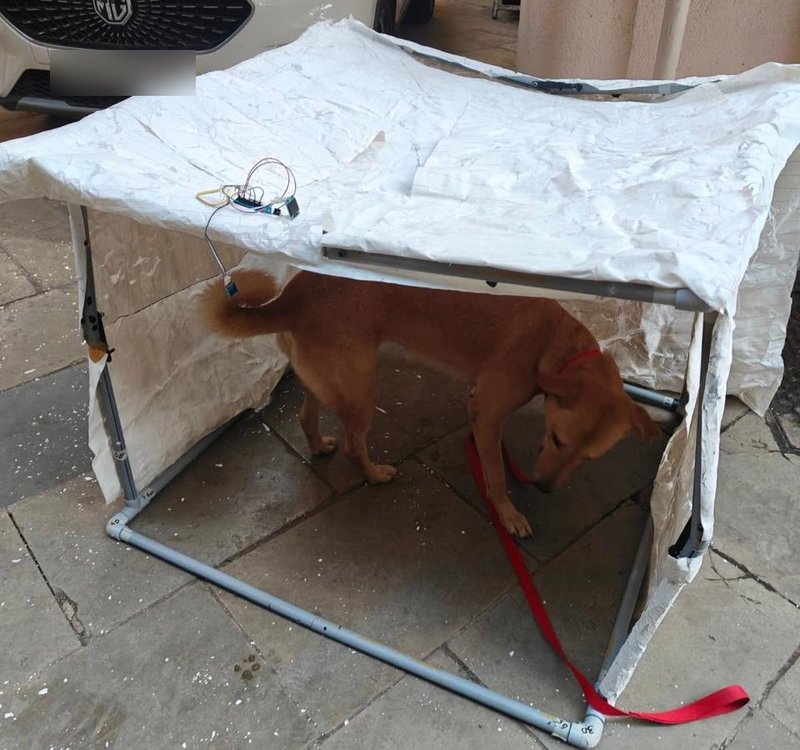
Development and Thermal Evaluation of a Foldable Reusable Passive-Cooling Shelter for Urban Stray Dogs Using Vernacular Ventilation and Reflective Lime Coating
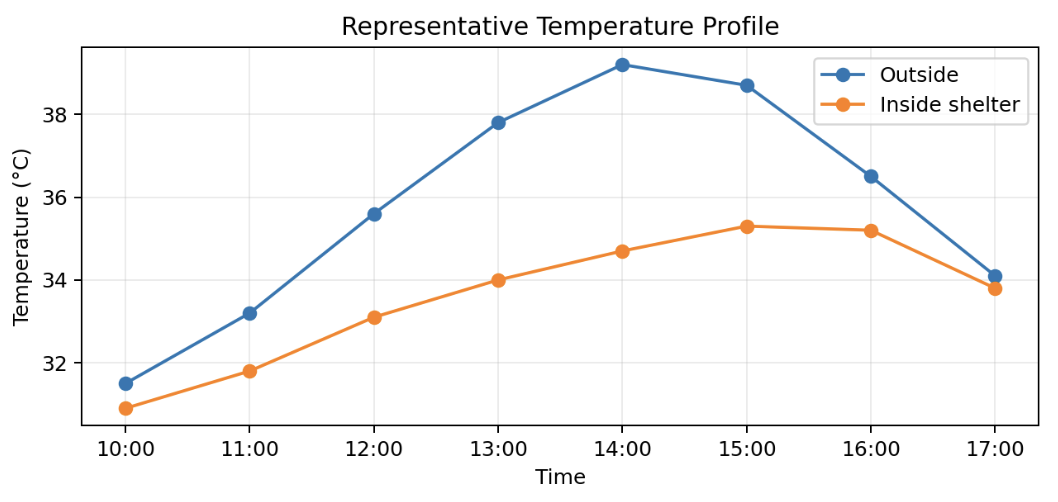
Abstract
Urban dogs are exposed to intense sunlight, hot surfaces, and high temperatures, increasing their susceptibility to heat stress. Conventional portable shelters may provide shade but often lack features specifically designed to mitigate heat accumulation. This study presents a foldable, reusable passive cooling device made of PVC components, T-joint and elastic-based folding elements, and 3D printed joints. Its exterior is coated with white chuna (lime), applied using Fevicol as an adhesive, to increase solar reflectance and minimise heat absorption. Openings on opposing sides facilitate cross-ventilation, drawing on passive cooling principles found in traditional Indian architecture. Thermal performance was evaluated using two DHT temperature-humidity sensors, positioned inside and outside the shelter. The primary metric of thermal performance was the temperature differential between the shelter’s interior and the ambient environment. Between 12 p.m and 4 p.m., an average temperature difference of 3.1 °C was recorded. The maximum difference was observed to be 4.5 °C, with an external temperature of 39.2 °C and an internal temperature of 34.7 °C. The highest recorded difference in relative humidity was approximately 6 percentage points. This study serves as an initial demonstration that reflective solar control in conjunction with natural air ventilation can decrease the internal heat load without active cooling methods.