Tata Institute of Fundamental Research (TIFR)
TIFR is a national research institute under India’s Department of Atomic Energy that conducts fundamental research in physics, chemistry, biology, mathematics, computer science, and science education.
Research Supervisors: Avik Dasgupta and Professor Shravan Hanasoge, Lightcurve.ai team
Distinguishing Planetary Transits from Stellar Rotation Using a Random Forest Classifier
Abstract
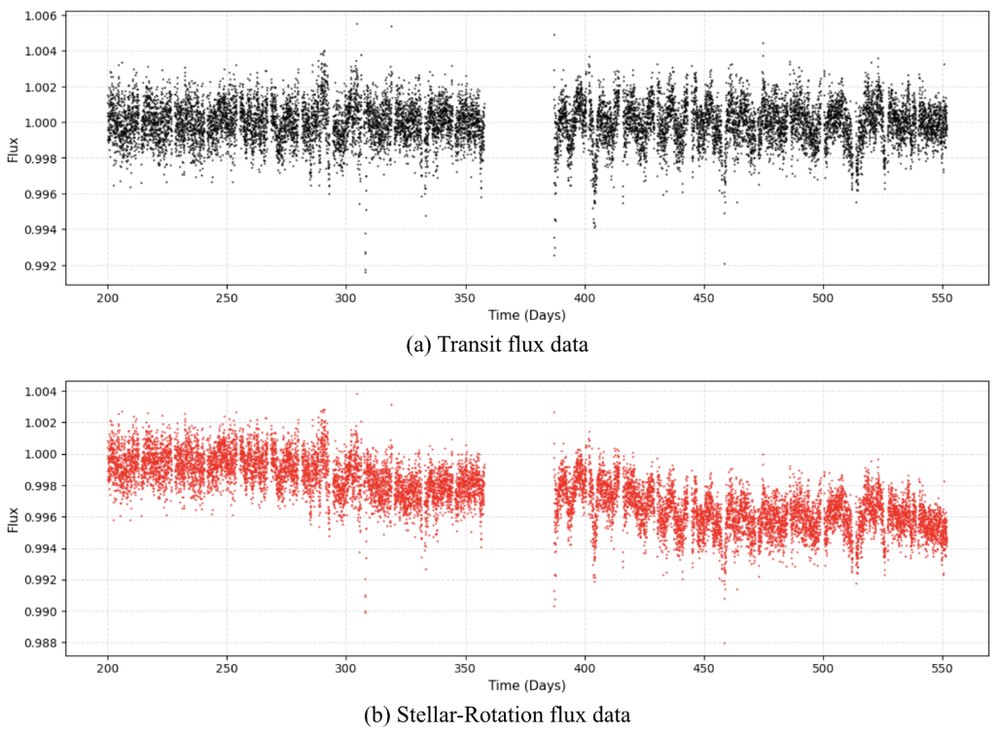
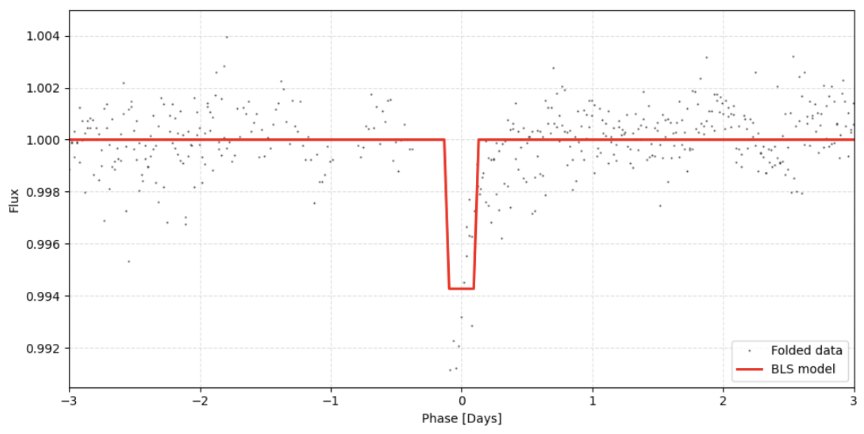
Stellar rotational variability can mimic periodic transit signals and produce false-positive exoplanet detections when detrending fails to remove it completely. Such detections are grouped with other false positives, and existing classifiers often rely on large feature sets or deep neural networks that are difficult to interpret. This study investigated whether a random forest using a small set of interpretable features could distinguish planetary transits from stellar rotation. Simulated systems comprising rotation-only light curves and corresponding light curves with injected transits were cleaned, detrended with a Savitzky–Golay filter, and searched for periodic signals using the Box Least Squares algorithm. Ten features adapted from common diagnostics describing the depth, shape, noise, periodicity, and physical plausibility of the detected signal were extracted, yielding a balanced dataset of 1,030 light curves. A random forest was trained and evaluated using an 80:20 train-test split and cross-validation, achieving a moderate accuracy of 0.711±0.021, with a comparable precision, recall, specificity, and F1-score, and an area under the receiver operating characteristic curve of 0.790±0.022. This exceeded the threshold-based metrics, suggesting many misclassifications lie near the decision threshold, which could be adjusted based on classification priorities. Permutation importance showed that the number of transits and implied stellar density, both dependent on the detected period, were the most informative features, whereas shape-based features contributed little. These results support treating stellar rotation as a distinct classification problem. The classifier could serve as a pre-filter, reducing the number of rotation-induced detections requiring further vetting.
Alfaa UV
Alfaa UV is an ISO 9001-certified company specializing in UV air and water purification systems. With 500,000+ users and exporting to 15 countries, it was acquired by U.S.-based Veralto Corporation in 2026.
Research Supervisor: Ankur Parikh, Managing Director
Ultraviolet Disinfection and Chlorination for Wastewater Reuse: A Comparative Analysis and Case Study
Abstract
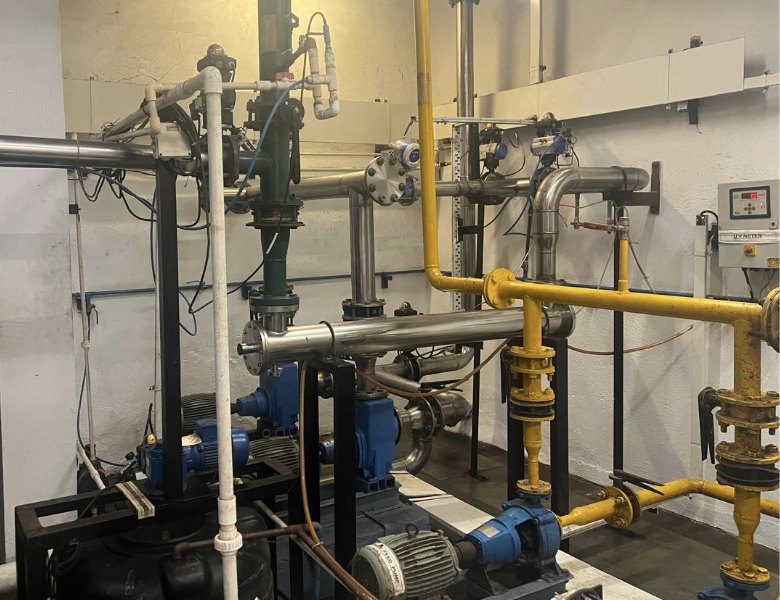
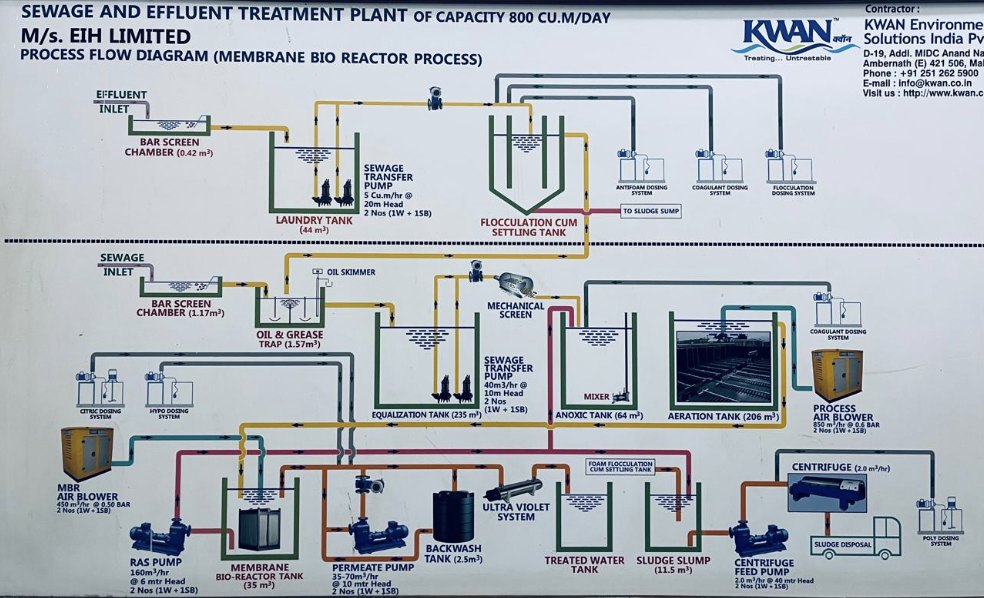
Water scarcity is a severe and growing problem in India and worldwide, creating the need to treat wastewater as a resource and expand its safe reuse. Disinfection is an essential stage of wastewater treatment to inactivate pathogenic microorganisms, with chlorination being the long-established method. This study compares ultraviolet (UV) disinfection and chlorination for wastewater reuse across health and safety, sustainability, and life-cycle cost. UV was found to offer substantial advantages for wastewater reuse, principally by eliminating the need for hazardous chlorine chemicals and avoiding the formation of disinfection by-products. Its carbon footprint is expected to become increasingly favourable as electricity grids decarbonise, since its primary energy requirement is electricity rather than chemical production and transport. UV also offers lower and more stable life-cycle costs, despite its higher electricity consumption and equipment costs. Although UV does not provide the residual protection offered by chlorination, this is not a significant disadvantage for non-potable wastewater reuse. A case study of the sewage treatment plant at Trident Nariman Point, Mumbai, where UV disinfection has been used since 2010, demonstrates the practical implementation of the technology in a wastewater-reuse system. The plant treats up to 800 KLD and reuses approximately 65% of its treated wastewater for non-potable applications. Overall, UV disinfection represents a practical and sustainable alternative to chlorination for wastewater reuse.
Prasol Chemicals
Prasol Chemicals is a specialty chemicals manufacturer producing 150+ organic and inorganic chemicals and exports to 69 countries.
Research Supervisors: Dr. Chhitra Vaidya, Head of R&D, and Pankil Dharia, Executive Director
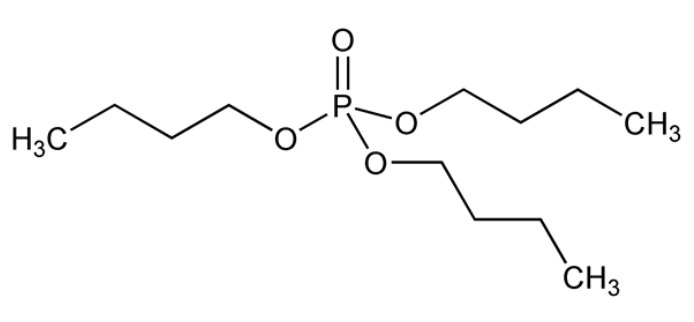
From Laboratory Research to Process Design: A Case Study of Tributyl Phosphate
Executive Summary
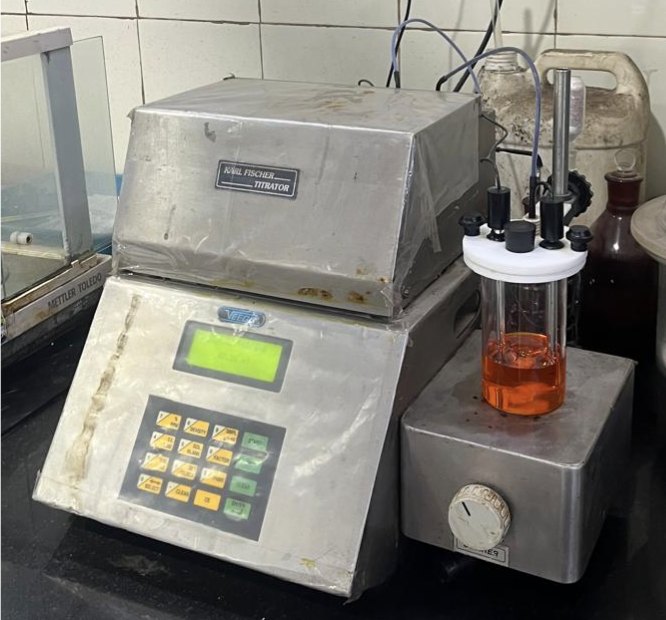
This report presents a case study of the development of tributyl phosphate (TBP) at Prasol Chemicals Limited, following the process from the closing stages of research and development (R&D) through to commercial process design. It is based on an internship undertaken at the company in which I studied the process. Following literature review and experimentation to optimise the synthesis process, the product TBP and recovered n-butanol were analysed at the laboratory through Karl Fischer titration, gas chromatography, and acid-base titration. Three validation batches prepared at a gram scale confirmed that the optimised laboratory synthesis produced TBP consistently, at purities of 98.87–99.80% and yields of 72.62–75.51%. However, the recovered n-butanol had a mean water content of 13.61%, exceeding the limit acceptable for reuse. This necessitates further research on purifying the recovered solvent. Process design serves as the intermediate stage that scales the product from R&D to manufacturing. At the design stage, a material balance established a throughput of 11.528 MT per MT of product, of which liquid effluent constitutes 6.955 MT, and an energy balance established a design steam rate of 600 kg/hr. The scale of the effluent stream indicates that the balance must be tested against the intended plant’s treatment capacity, and a full environmental assessment must be prepared. Based on the material balance, a block flow diagram, process flow diagram, and piping and instrumentation diagram were created. The next stage would be a pilot plant producing TBP at the kilo scale, followed by commercial manufacturing at a ton scale; TBP did not reach these stages during the internship.